If you've ever imported or exported goods, you've probably heard the term freight forwarder. But what exactly do they do?
Many people assume a freight forwarder's job is simply to book a ship or an aircraft. In reality, that's only a small part of the story.
After spending nearly a decade in freight forwarding, I've realised our job is less about moving cargo and more about making sure nothing gets in the way of it. Because in international logistics, delays rarely happen because a ship forgot where it was going; they usually happen because of missing paperwork, customs issues, or poor coordination.
A freight forwarder acts as your logistics partner, bringing together transport providers, customs authorities, warehouses, and delivery networks to ensure your shipment reaches its destination safely, efficiently, and on time.
Let's take a closer look at what a freight forwarder actually does and why businesses of all sizes rely on one.
The Core Role of a Freight Forwarder
At its heart, freight forwarding is about planning, coordinating and managing the movement of goods from origin to destination ensuring premium quality services.
A freight forwarder doesn't usually own the ships, aircraft, or lorries that carry your cargo. Instead, they use their industry knowledge and trusted network of carriers to create the most efficient shipping solution based on your cargo, budget, and delivery schedule.
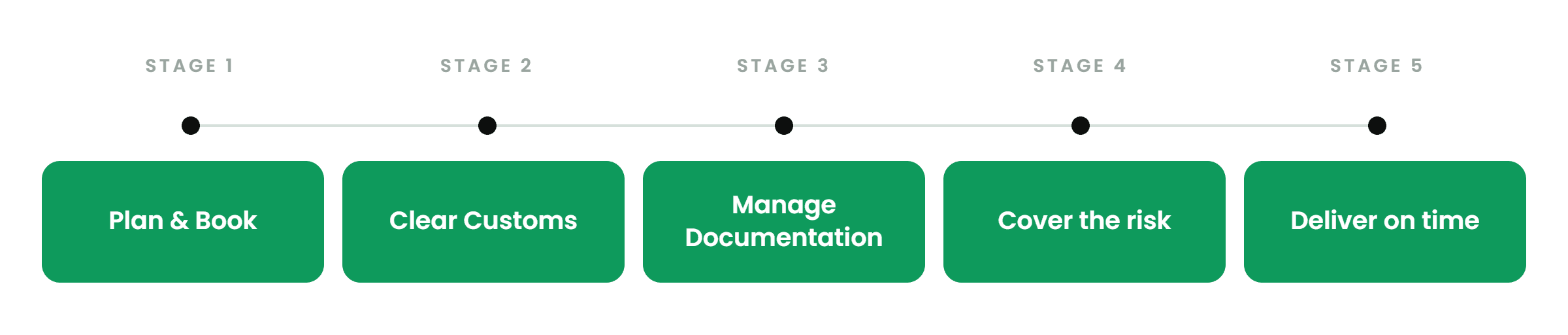
Think of a freight forwarder as the project manager of your shipment. Rather than contacting multiple transport companies, customs brokers, warehouses and delivery providers yourself, you have one experienced point of contact overseeing every stage of the journey.
Their role is to anticipate challenges before they become costly problems, ensuring your shipment keeps moving even when international logistics becomes unpredictable.
Booking and Coordinating Shipments
Booking transport is far more than selecting the cheapest freight rate. An experienced freight forwarder evaluates several factors before recommending the best shipping solution, including:
The type of goods being shipped (Perishable/Dangerous goods/Temperature controlled)
Weight, Packaging and dimensions
Delivery deadlines
Origin and Destination
Budget
Import and export requirements
Once the best route has been identified, they coordinate with airlines, shipping lines, haulage companies, warehouses and overseas agents to ensure every stage of the journey runs smoothly.
It's rather like booking a complex international itinerary for your cargo. Every connection matters and unlike holiday luggage, delayed freight can impact production schedules, customer commitments and business costs.
It's much like conducting an orchestra. Every participant has an important role to play, and success depends on everyone working in perfect harmony. One missed cue can throw the entire performance off balance.
Handling Customs Clearance on Your Behalf
Customs clearance is often one of the most challenging parts of international shipping.
Every country has its own import regulations, documentation requirements, duties, taxes and compliance rules. Even a small error can result in delays, inspections or unexpected costs.
A freight forwarder works closely with customs brokers to prepare and submit customs declarations, classify goods correctly and ensure all regulatory requirements are in place before your shipment reaches the border.
Good customs planning doesn't just speed up clearance it also reduces the likelihood of costly mistakes.
As many experienced importers know, customs officers appreciate accurate paperwork far more than convincing explanations afterwards!
Managing Shipping Documentation
If freight forwarding had a secret ingredient, it would probably be documentation.
Every international shipment relies on accurate paperwork. Commercial invoices, packing lists, Bills of Lading, Air Waybills, Certificates of Origin and customs declarations all play an important role in moving goods across borders.
A freight forwarder prepares, reviews and coordinates these documents to ensure they are complete, accurate and compliant with international trade regulations.
After all, cargo can travel thousands of miles without complaint but one missing document can stop it in its tracks.
Arranging Cargo Insurance
While every shipment is planned carefully, international transportation always carries a degree of risk.
Unexpected weather, accidents, theft, or handling damage can occur during transit. Cargo insurance provides financial protection should the unexpected happen.
A freight forwarder can help arrange suitable cargo insurance based on the value and nature of your goods, giving you added peace of mind throughout the shipping process.
It's one of those things you hope you'll never need but you'll be glad it's there if you do.
When Should You Use a Freight Forwarder Instead of Handling It Yourself?
For occasional domestic deliveries, arranging transport yourself may be relatively straightforward.
International shipping, however, is a very different story.
When your shipment involves customs procedures, multiple carriers, overseas regulations, shipping documentation and tight delivery schedules, professional guidance becomes invaluable.
A freight forwarder is particularly beneficial if you:
Import or export goods regularly.
Are shipping internationally for the first time.
Need customs clearance support.
Have time-sensitive or high-value cargo.
Want to reduce shipping risks and administrative workload.
Need reliable door-to-door logistics.
Are looking for expert advice on international trade compliance.
Could you manage the process yourself? Possibly.
Should you? That depends on how much you value your time and how much you enjoy reading customs regulations over your morning coffee!
For most businesses, partnering with an experienced freight forwarder allows them to focus on growing their business while leaving the complexities of international logistics to specialists.
Thoughts
A freight forwarder does far more than arrange transportation. They plan routes, coordinate shipments, manage documentation, oversee customs clearance, organise cargo insurance and solve problems before they affect your business-supply chain.
In today's fast-moving global marketplace, having an experienced logistics partner isn't simply about moving goods from one place to another. It's about protecting your supply chain, reducing risks and giving you the confidence that every shipment is in capable hands.
Because at the end of the day, successful freight forwarding isn't measured by how many containers move around the world, it's measured by how smoothly they reach their destination-door step.